Rosa Klein · 1 October 2026
Understanding Shifts in Traffic Sources During Website Transitions via Advanced Analytical Methods
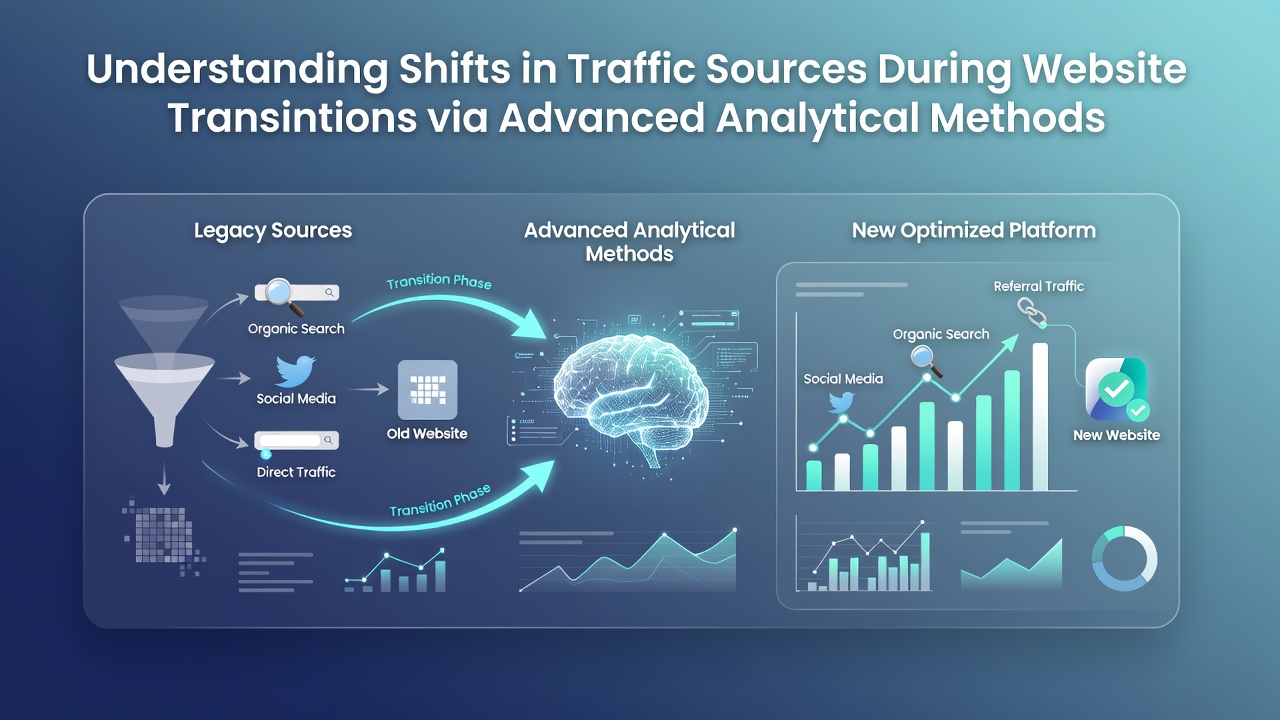
Website transitions such as platform migrations, domain changes, or structural redesigns frequently alter how visitors arrive at a site, and advanced analytical methods provide the tools to measure those changes with precision. Data from multiple sources shows that organic search, direct visits, referrals, and social channels respond differently depending on the nature of the transition, while paid traffic often remains more stable unless campaign parameters shift.
Patterns Observed in Traffic Redistribution
Analysts tracking large-scale site moves have documented consistent patterns where organic search volumes dip initially then recover at varying rates based on how thoroughly search engine guidelines are followed during the process. Direct traffic tends to fluctuate when URL structures change because bookmark and typed address behavior gets disrupted, whereas referral pathways can expand or contract depending on whether backlinks are preserved and updated correctly. Social media sources often show the least volatility in such scenarios since those visits rely on external posts rather than site architecture.
Studies conducted across enterprise sites in 2025 revealed that sites undergoing HTTPS implementation alongside domain consolidation experienced sharper temporary declines in organic traffic compared with those handling only internal platform upgrades. Observers note that the timing of these shifts aligns closely with crawl frequency and indexation updates reported by major search engines.
Advanced Methods for Isolating Source Changes
Cohort analysis enables researchers to separate new visitors from returning ones and track how each group responds to transition events, revealing whether shifts stem from reduced discoverability or altered user behavior. Multi-touch attribution models further clarify the picture by assigning value across channels instead of crediting only the last interaction, which proves especially useful when referral and social sources interact during a migration window. Machine learning techniques applied to historical data help predict expected recovery curves, allowing teams to flag anomalies that require immediate investigation.
Segmentation by device type and geographic region adds another layer, since mobile traffic and desktop traffic frequently diverge after a responsive redesign, and regional differences appear when content delivery networks or language versions are updated. Those who've examined datasets from 2024 through mid-2026 report that combining these approaches yields clearer signals than relying on aggregate reports alone.

Integration with Platform Updates in October 2026
Platform enhancements rolled out in October 2026 introduced improved cross-domain tracking capabilities and refined consent management interfaces that affect how analytics tools capture data from transitioned sites. These changes allow more accurate stitching of user journeys across old and new domains, reducing the artificial inflation of direct traffic that previously occurred when cookies failed to persist. Analysts have incorporated these features into existing cohort and attribution frameworks to produce more reliable before-and-after comparisons.
Evidence from organizations that adopted the updates early indicates faster identification of referral source decay, particularly when partner sites updated their own link structures in tandem with the primary migration. The combination of enhanced data collection and established analytical methods has become standard practice for teams managing complex transitions.
Practical Application Through Segmented Reporting
Teams construct custom dashboards that isolate traffic source metrics by week relative to the transition date, enabling direct comparison against control periods. Filters for campaign parameters, UTM consistency, and landing page performance help isolate whether observed shifts originate from external factors or internal configuration choices. One enterprise that completed a full content management system migration in early 2026 used these segmented views to determine that a 22 percent drop in referral traffic stemmed from unupdated partner links rather than changes in user interest.
Cross-referencing with server log data and third-party crawl reports further validates analytics findings, since discrepancies between logged requests and reported sessions often point to tracking implementation gaps introduced during the transition. Researchers continue to refine these combined methodologies as data volumes grow and platform features evolve.
Conclusion
Advanced analytical methods supply the structure needed to quantify traffic source shifts during website transitions, turning raw fluctuations into actionable insights. By applying cohort analysis, attribution modeling, and segmented reporting alongside platform capabilities introduced in October 2026, organizations obtain clearer visibility into how organic, direct, referral, and social channels respond over time. The approach supports more accurate planning for future transitions and helps maintain continuity across key acquisition pathways.